Exercise Is Medicine for Hypertension
Physical activity is one of the most powerful non-pharmacological treatments for high blood pressure. The evidence is overwhelming: regular aerobic exercise reduces resting blood pressure by 5–8 mmHg on average — and for some people, by much more. For seniors with Stage 1 hypertension, exercise alone may be sufficient to bring blood pressure into the normal range without medication.
How Exercise Lowers Blood Pressure
Exercise works through multiple mechanisms. In the short term, physical activity causes temporary blood pressure increases, but these are followed by a "post-exercise hypotension" — a reduction below pre-exercise levels that can last for hours. Over time, regular exercise strengthens the heart muscle, reduces arterial stiffness, promotes weight loss, and improves the kidneys' ability to manage sodium — all of which contribute to sustained blood pressure reduction.
The Best Types of Exercise for Seniors with Hypertension
Aerobic Walking: The most accessible and effective exercise for most seniors. Walk briskly for 30 minutes, five days per week. "Brisk" means a pace where you can speak in short sentences but feel slightly breathless. Even 10-minute walks, taken three times daily, produce similar blood pressure benefits to a single 30-minute session.
Swimming and Water Aerobics: Ideal for seniors with joint pain, arthritis, or balance concerns. The buoyancy of water reduces impact while still providing excellent cardiovascular benefits. Water resistance also gently strengthens muscles throughout the body.
Cycling: Stationary or outdoor cycling provides excellent low-impact cardiovascular exercise. A 30-minute cycle session produces blood pressure reductions comparable to walking. For seniors concerned about balance, a stationary bike or recumbent bike offers maximum safety.
Resistance Training: Contrary to older medical advice, moderate weight training is now recommended for seniors with hypertension. Resistance exercise reduces systolic pressure by about 4 mmHg on average. Use lighter weights with higher repetitions (12–15 reps) rather than heavy weights with low repetitions, which can cause unsafe pressure spikes.
How Much Exercise Do You Need?
Current guidelines recommend at least 150 minutes of moderate-intensity aerobic activity per week (30 minutes, five days a week) plus two sessions of muscle-strengthening activities. For blood pressure specifically, even 90–120 minutes per week shows measurable benefits. More exercise generally produces greater reductions, but even modest increases in activity level help seniors who are currently sedentary.
Exercise Safety Guidelines for Seniors with Hypertension
Always check with your doctor before starting a new exercise program, especially if you have uncontrolled blood pressure above 180/110, heart disease, or recent cardiovascular events. Warm up for 5–10 minutes before aerobic exercise and cool down for equal time afterward — stopping abruptly can cause dangerous blood pressure changes. Stay hydrated, especially in warm weather, as dehydration raises blood pressure. Stop exercising immediately if you experience chest pain, shortness of breath, severe headache, or dizziness.
The Right Time to Measure Blood Pressure Around Exercise
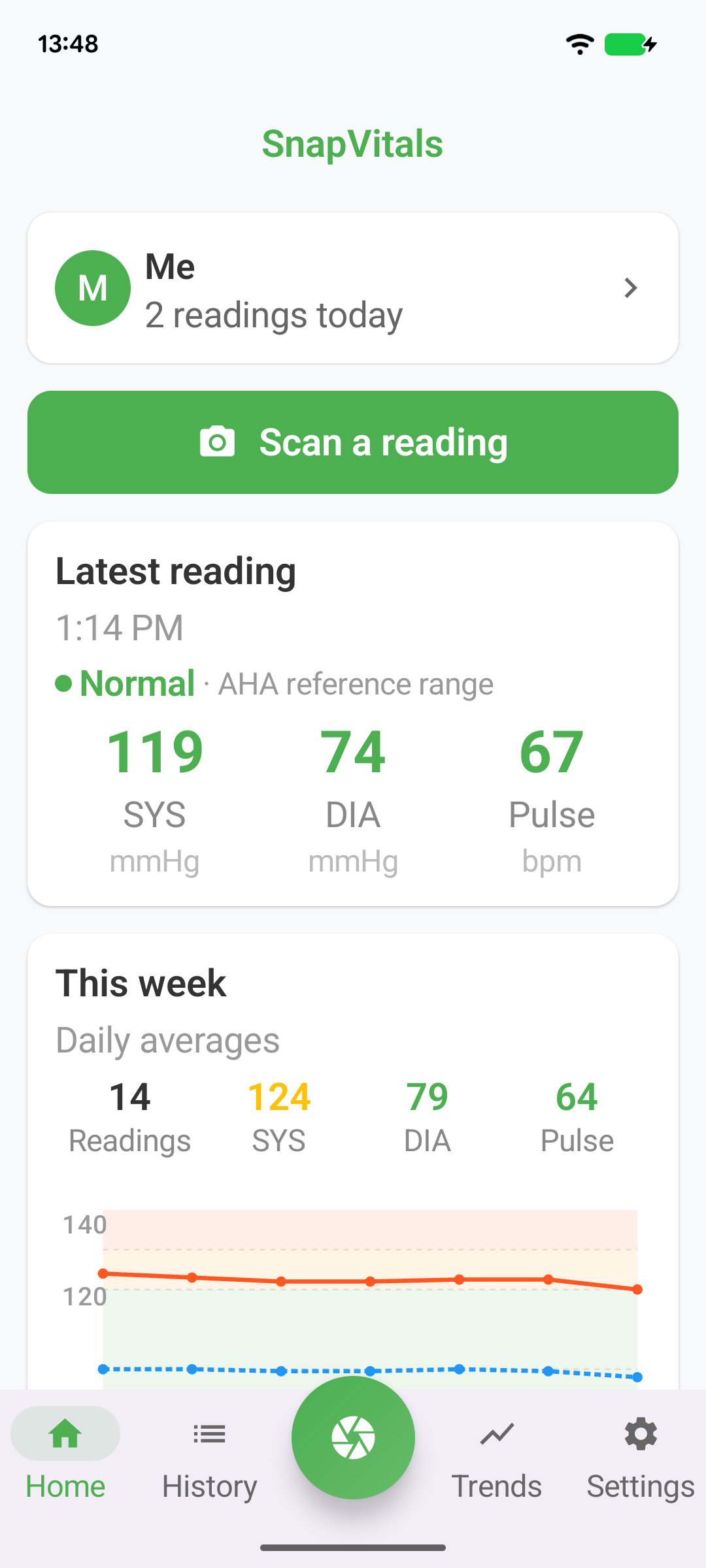
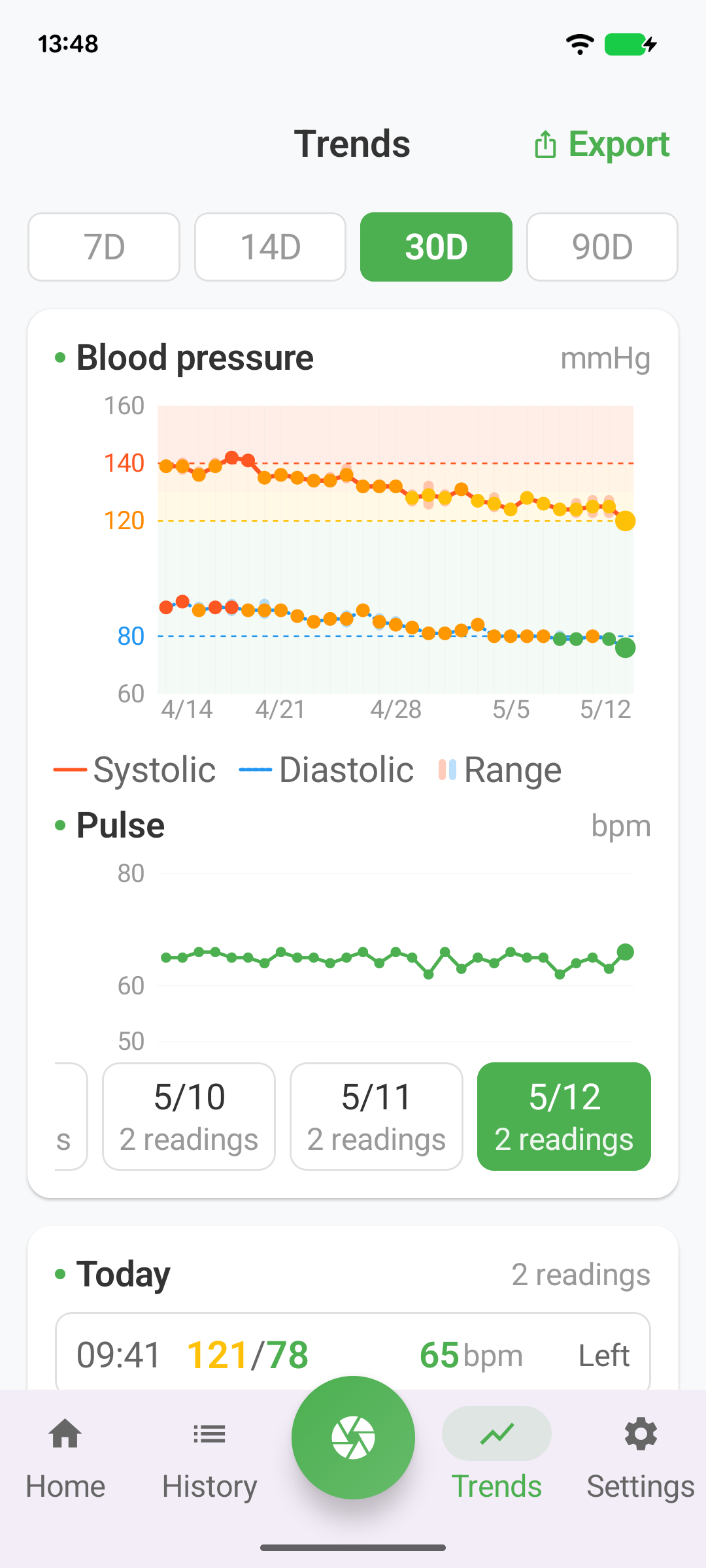
Don't measure blood pressure immediately after exercise — it will be temporarily elevated. Wait at least 30 minutes after finishing your workout for an accurate reading. However, measuring about 60–90 minutes after exercise will often show your lowest blood pressure of the day, demonstrating the beneficial effect of your workout. Tracking these patterns with SnapVitals helps you see exactly how exercise is affecting your cardiovascular health.
Making Exercise a Habit
The biggest challenge for most seniors is consistency, not capability. Research shows that people who attach new habits to existing routines are far more successful than those who rely on willpower alone. Try walking immediately after breakfast every morning, or cycling while watching the evening news. Having a walking partner — whether a friend, family member, or dog — dramatically increases adherence. Track your activity alongside your blood pressure readings to see the direct connection between movement and lower numbers.