Measure as usual
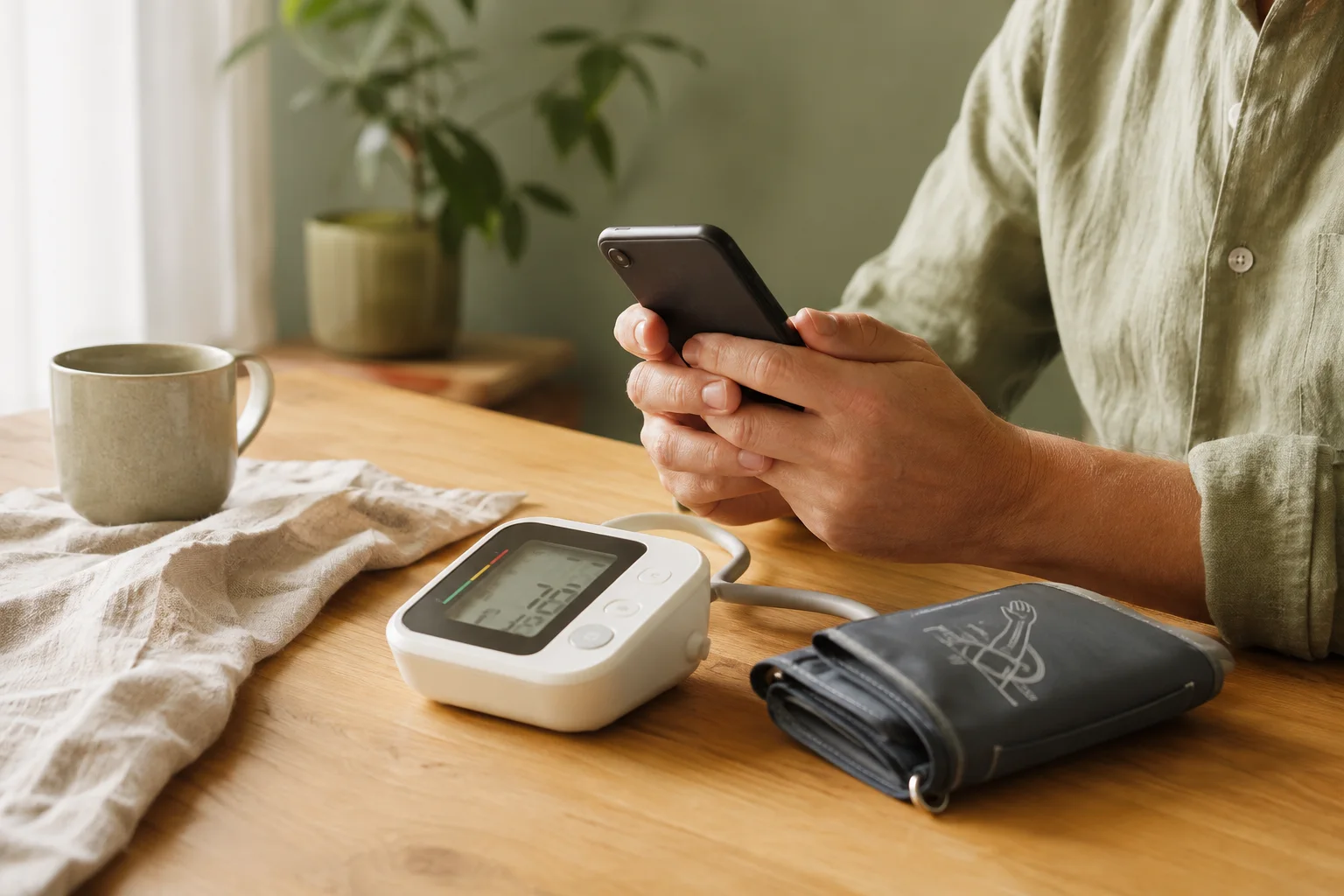
Take your blood pressure with your own monitor.
 SnapVitals
YOUR EVERYDAY BLOOD PRESSURE JOURNAL
Turn a photo of your monitor into a blood pressure record. Keep your readings together, notice patterns, and make room for the rest of your day.
Availability, features and purchases vary by platform and version. See your store listing for details.
01 / A SIMPLE START
Three small steps. One less thing to write down.
Take your blood pressure with your own monitor.
Photograph the display, or enter the numbers manually. Check the reading before saving.
Review your saved readings and changes over time.
02 / A LITTLE PERSPECTIVE
A quieter place for the numbers that matter to you.
Keep blood pressure and pulse readings together in a simple journal.
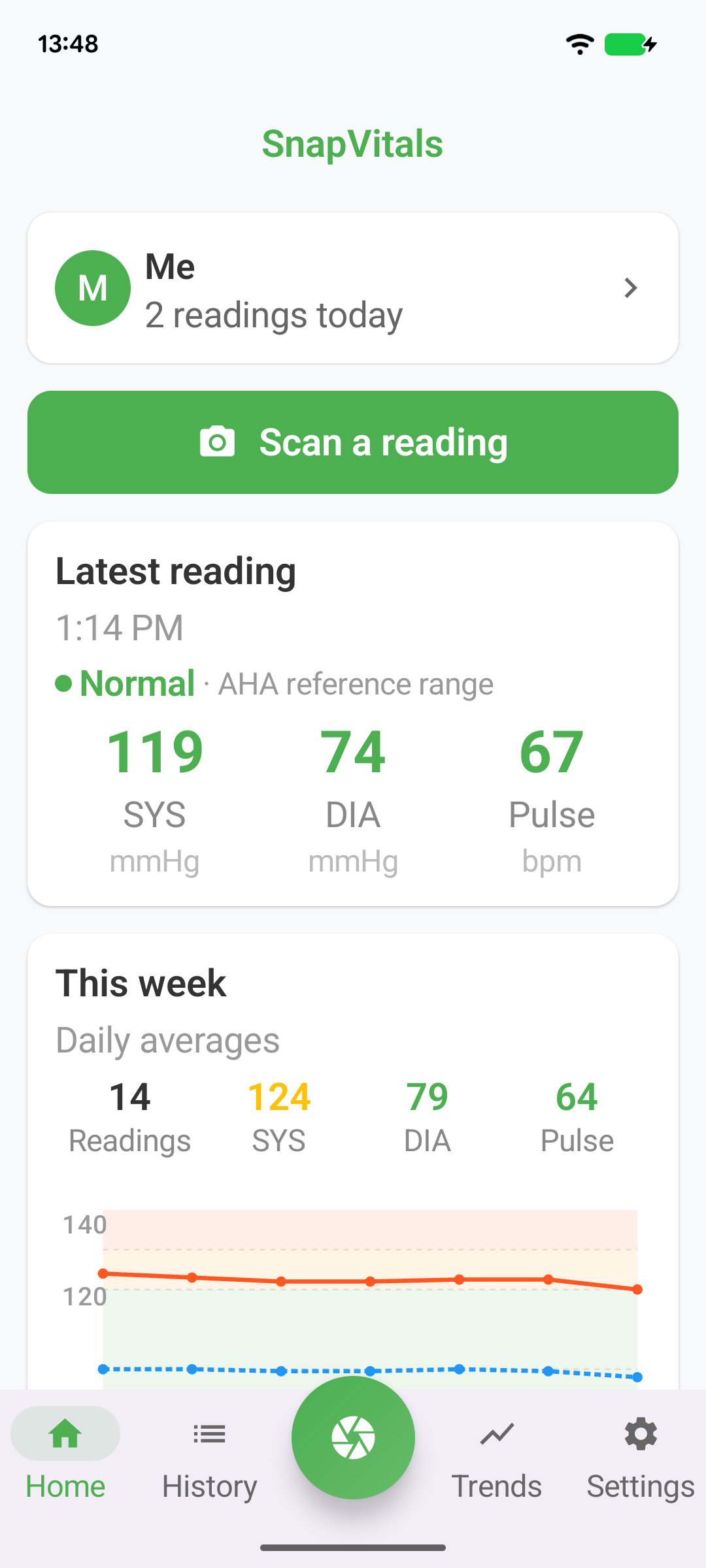
Explore your history and trends beyond a single reading.
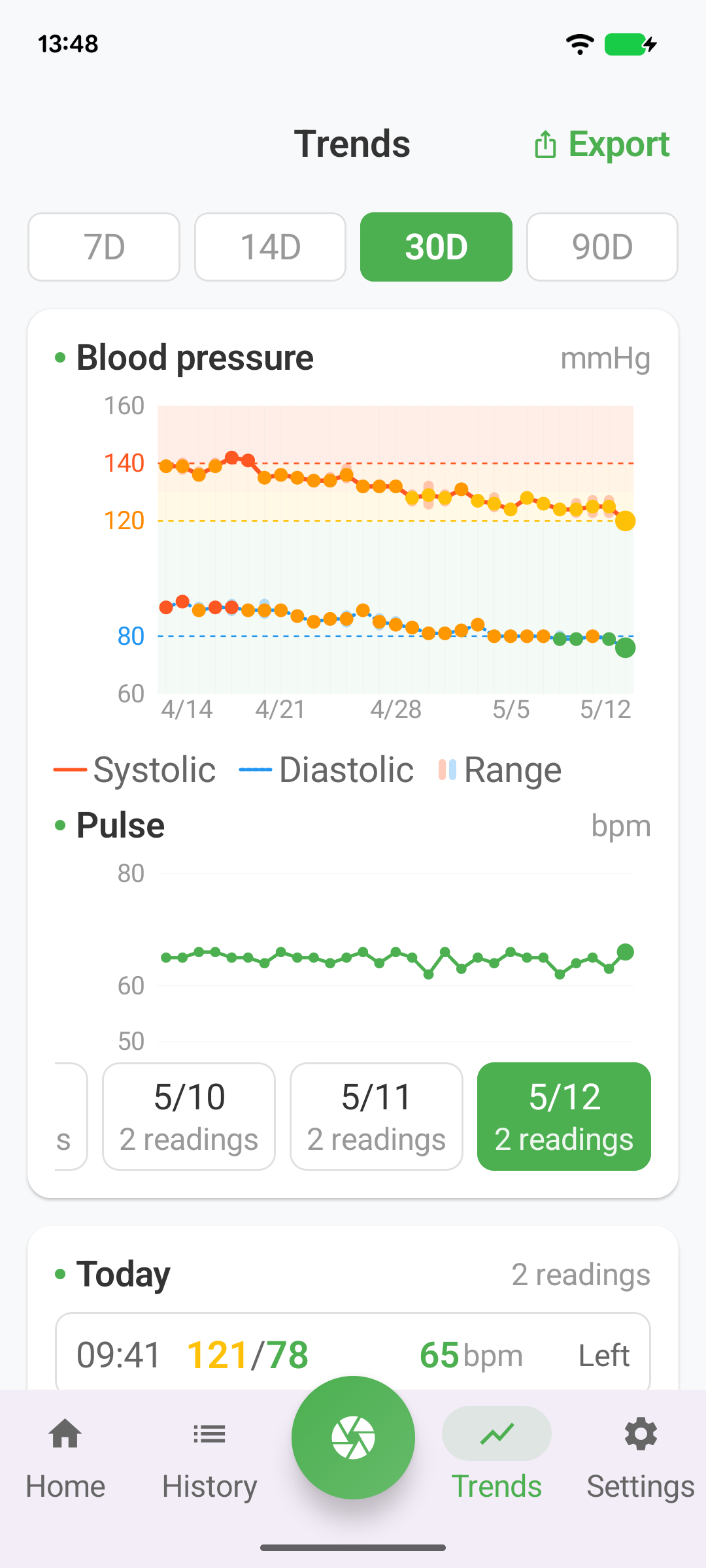
Actual Android product screens with example records. Appearance and features vary by platform and version.
THOUGHTFUL BY DESIGN
Understand how your information is handled, including optional sharing and sync features. Read the privacy policy for details before choosing what to use.
Read the privacy policyNo. Use a separate blood pressure monitor to take a measurement. SnapVitals helps you record and review the results.
Always check the recognized numbers against your monitor before saving. You can also enter readings manually.
Features, supported devices, advertising and purchase options can differ by platform, region and release. Check the relevant store listing.
No. SnapVitals is a journal, not a medical device. It does not diagnose or treat conditions. Discuss your readings and treatment decisions with a qualified healthcare professional.
SnapVitals
Start with your next reading.