Why Home Monitoring Outperforms Office Readings
The standard blood pressure measurement at your doctor's office captures a single moment — often influenced by anxiety, rushing to the appointment, or the stress of a clinical environment. Home monitoring, done correctly over days and weeks, gives your doctor a far more complete and accurate picture of your cardiovascular health. Multiple studies have shown that home monitoring leads to better blood pressure control, fewer medication side effects (from over-treatment), and lower healthcare costs.
The American Heart Association recommends home monitoring for all adults with elevated or high blood pressure, and for anyone on antihypertensive medications. For seniors, home monitoring is particularly valuable because it can identify dangerous patterns like early morning surges, nighttime hypertension, or white-coat hypertension.
Choosing the Right Blood Pressure Monitor
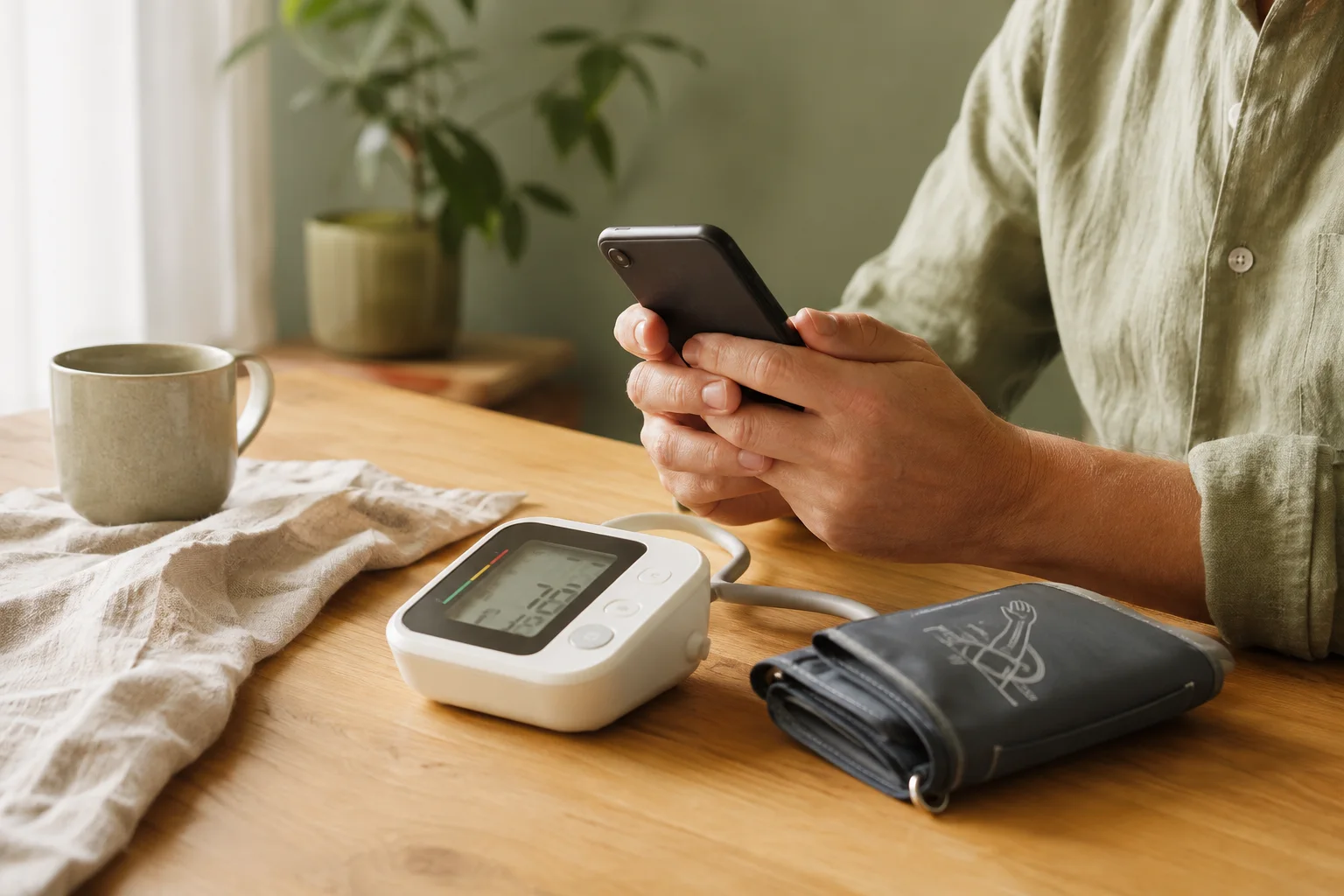
The two main types are upper-arm monitors and wrist monitors. Upper-arm monitors are significantly more accurate and are the only type recommended by the AHA for self-monitoring. Wrist monitors are convenient but highly sensitive to wrist position and produce less reliable readings for most users, especially older adults.
Look for monitors that are clinically validated — a list is maintained at validateBP.org. Choose a monitor with a cuff that fits your arm correctly (improper cuff size is the most common cause of inaccurate readings). Models with Bluetooth connectivity or large, easy-to-read displays are particularly useful for seniors.
The Perfect Blood Pressure Measurement Technique
Step 1 — Prepare: Sit quietly for 5 minutes before measuring. Empty your bladder if needed. Don't exercise, consume caffeine, smoke, or eat a large meal within 30 minutes of measuring.
Step 2 — Position correctly: Sit in a chair with back support, feet flat on the floor, legs uncrossed. Place your arm at heart level on a table or armrest. Remove tight clothing from your upper arm.
Step 3 — Apply the cuff: Place the cuff directly on your bare skin, not over clothing. Position the lower edge of the cuff about 1 inch (2.5 cm) above the bend of your elbow. The cuff should be snug but allow one finger underneath.
Step 4 — Take two readings: Take your first reading. Wait one minute, then take a second reading. Average the two numbers. If the two readings differ by more than 10 mmHg, take a third reading and average all three.
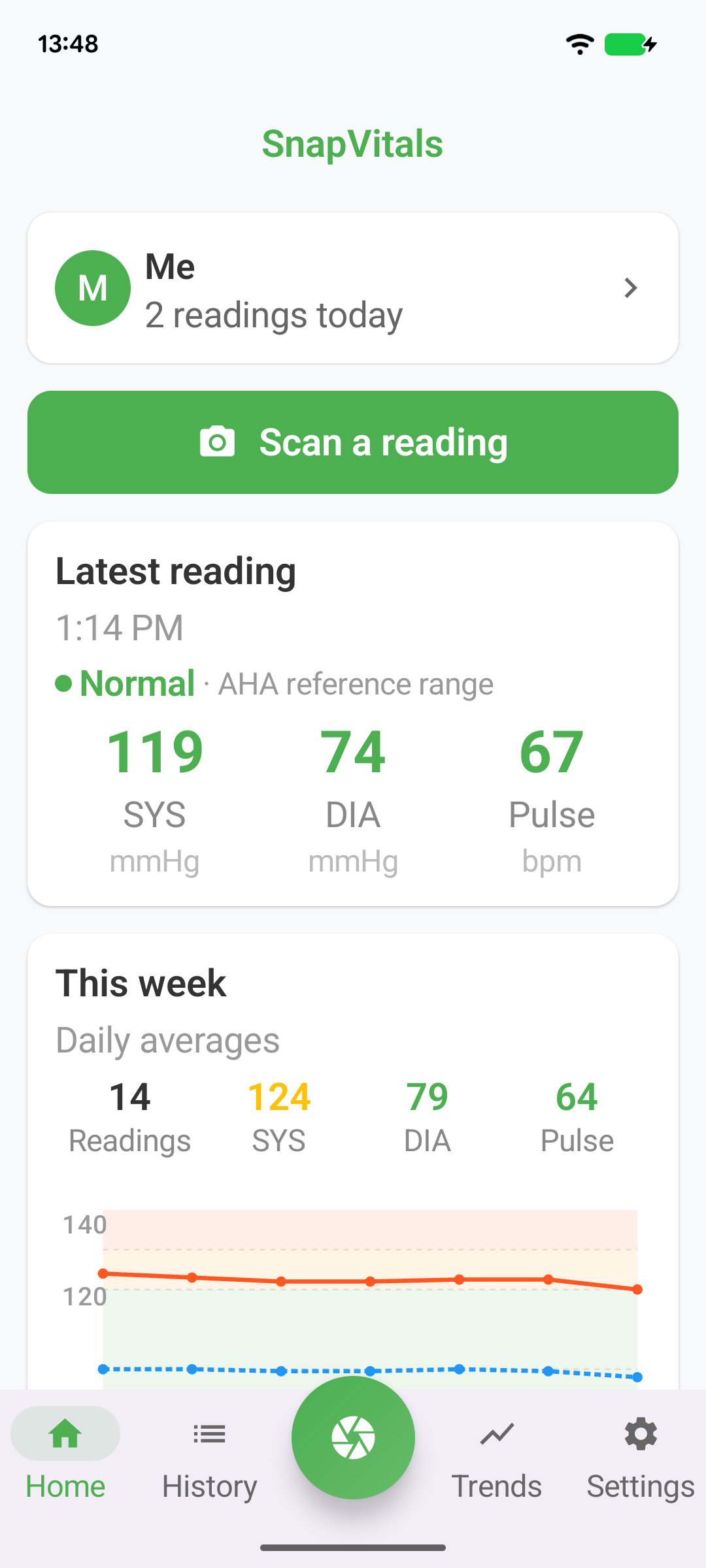
Step 5 — Record immediately: Write down or log your results right away — memory is unreliable. Apps like SnapVitals can read your monitor's display automatically with your phone camera, eliminating manual entry entirely.
When to Measure: Creating a Routine
Morning measurement: Within 1 hour of waking, before taking blood pressure medication, before breakfast, and before physical activity. This gives your baseline fasting blood pressure.
Evening measurement: Before dinner, about 8–12 hours after your morning reading. Evening readings often differ significantly from morning readings, providing important additional information about your 24-hour pattern.
Taking measurements at consistent times each day allows meaningful trend analysis. Random measurements at different times of day produce confusing, uninterpretable data.
Understanding and Using Your Data
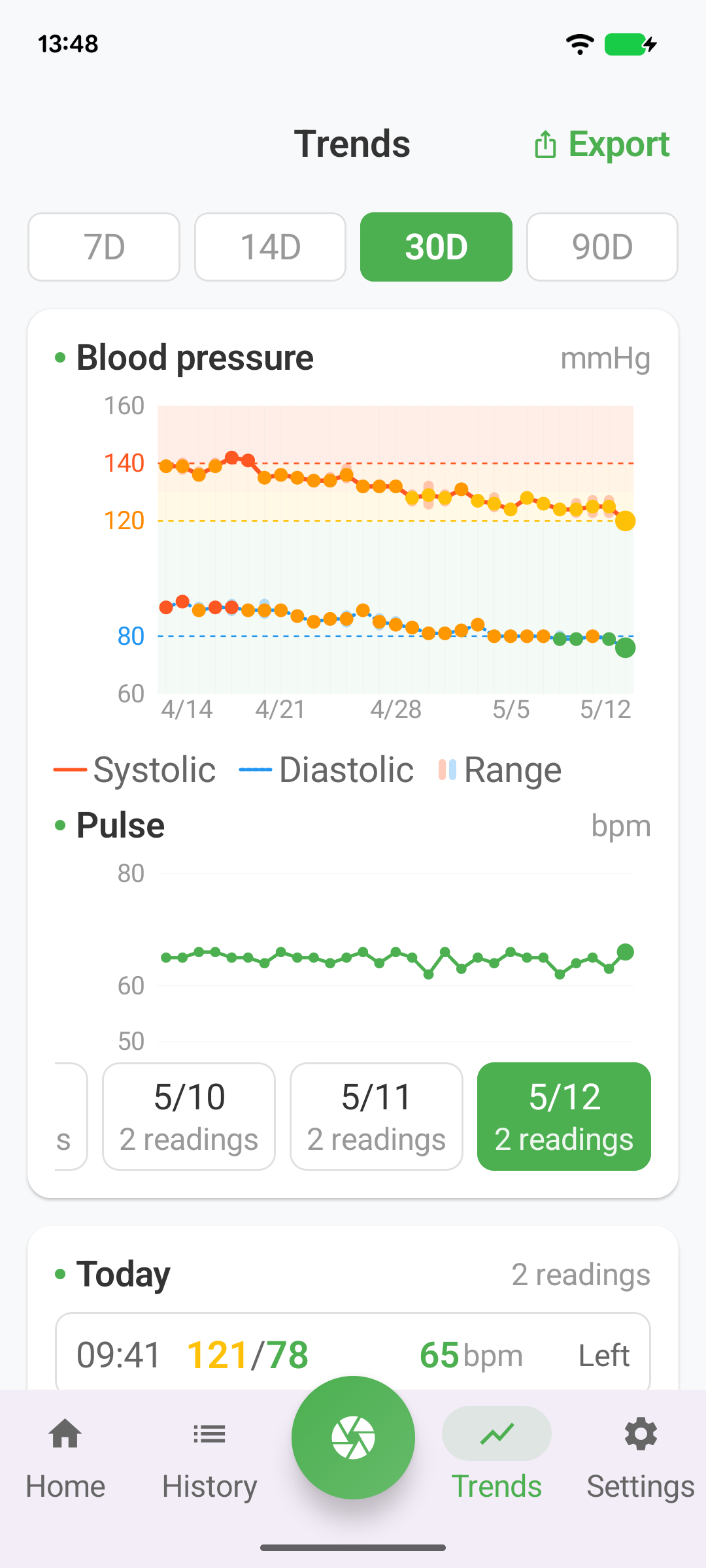
After 7–10 days of twice-daily measurements, you'll have enough data to identify your personal patterns. Look for: consistently high morning readings (may indicate need for medication timing adjustment); significant variability between readings (may indicate stress, caffeine, or medication issues); a gradual downward trend (confirming your lifestyle changes are working).
Bring your log to every doctor's appointment. Many physicians now prefer to see a 2–4 week home monitoring log rather than relying on office readings alone. Apps like SnapVitals can generate a formatted PDF report of your readings — exactly the type of data your doctor wants to see.
Common Mistakes That Lead to Inaccurate Readings
Using the wrong cuff size (too small inflates numbers, too large deflates them), measuring immediately after waking without resting, crossing legs (raises systolic by 2–8 mmHg), supporting your arm in the air rather than resting it on a surface (raises diastolic by 10 mmHg), talking during measurement, wearing a cuff over clothing, and measuring immediately after eating a large meal are all common errors that can make your readings unreliable.